Vehicle basics for the Swiss theory exam
Lighting, tyres, brakes and safety equipment – everything you need to know about your vehicle for the theory exam.
Vehicle lighting – when to use which light?
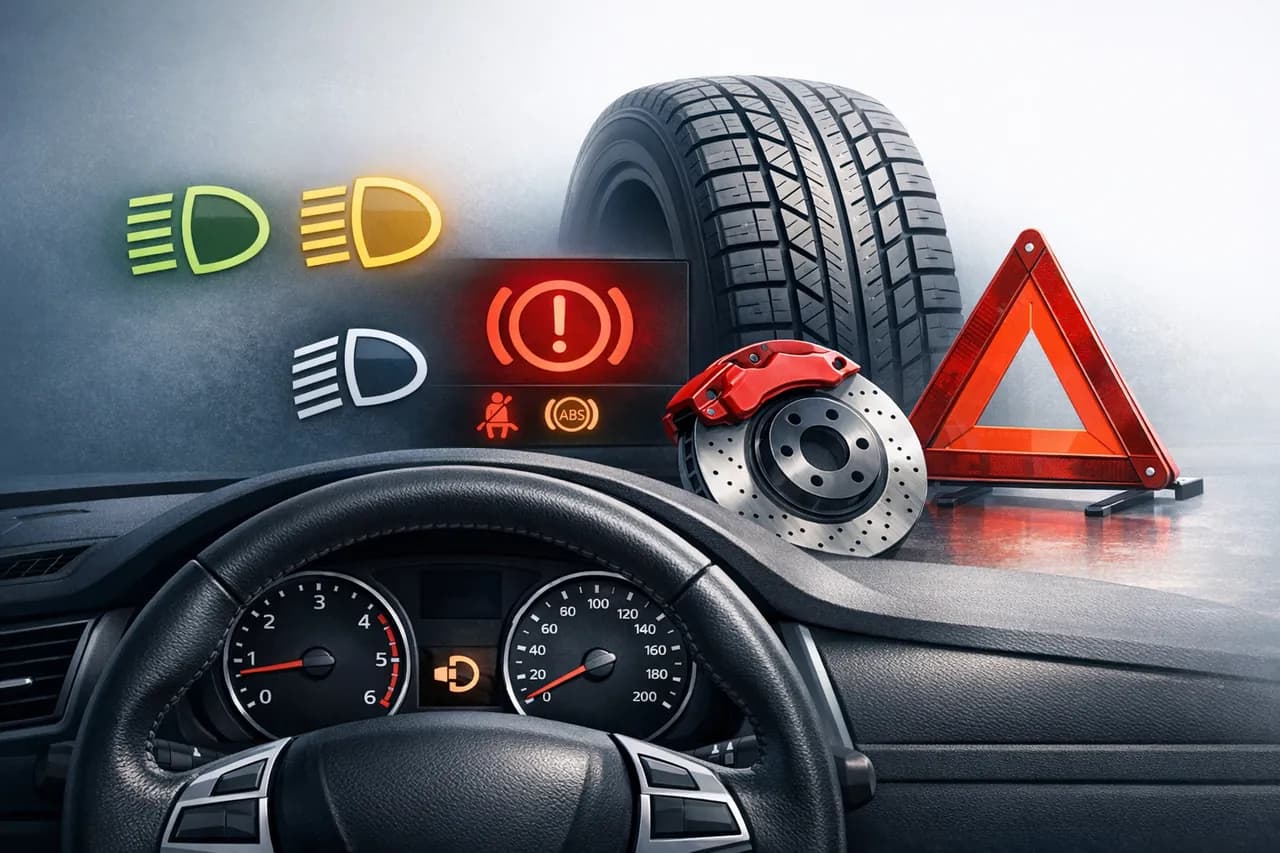
Correct use of vehicle lighting is a frequent exam topic. Since 2014, Switzerland requires daytime lights—either dipped headlights or daytime running lights must be on for every journey.
- Dipped headlights – mandatory at night, in tunnels, in poor visibility
- Daytime running lights – sufficient during the day in good visibility
- Full beam – only outside built-up areas with no oncoming traffic
- Sidelights – only for marking a parked vehicle at night
- Fog lights – only in heavy fog, snowfall or rain
Tyres – tread depth and pressure
The minimum tread depth in Switzerland is 1.6 mm. At least 3 mm is recommended in summer, 4 mm in winter. Check tyre pressure regularly when tyres are cold.
Winter tyres: Not legally mandatory by calendar date, but drivers are responsible for vehicle safety in wintry conditions. If you cause an accident on unsuitable tyres, your insurance cover may be reduced.
Brakes – ABS and braking distance
ABS prevents wheel lock-up during emergency braking and maintains steering ability. The braking distance depends on speed, road surface and tyre condition. The Swiss asa exam distinguishes between two formulas:
- Normal braking distance: (speed ÷ 10) × (speed ÷ 10)
- Emergency braking distance: (speed ÷ 10) × (speed ÷ 10) ÷ 2
Safety equipment
- Seat belt – mandatory for all occupants
- Child seat – children under 12 or under 150 cm need an appropriate restraint
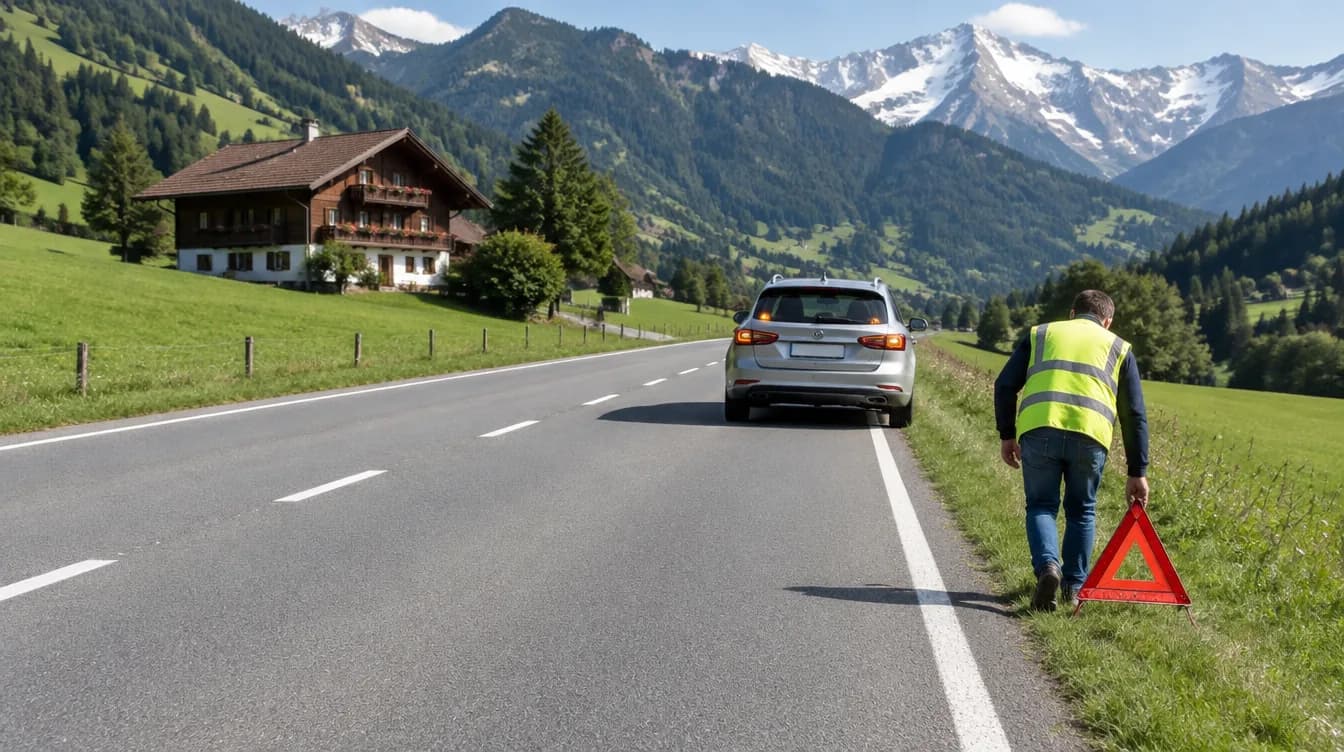
- Warning triangle – must be carried and deployed in case of breakdown
- Safety vest – not legally mandatory to carry in Switzerland, though recommended. (Watch out for exam trick questions!)