Roundabouts in Switzerland: theory exam rules
Swiss roundabouts for the theory exam: priority in the circle, signalling on entry/exit, bikes & pedestrians, multi-lane tips – typical traps and how to practise.
Why roundabouts cost points in the theory exam
Roundabouts in Switzerland rarely fail because you lack a definition – they fail on picture questions: entering, signalling, lane choice, bikes and pedestrians at the exit. Base theory tests exactly these patterns under time pressure. This guide goes deep on Kreisel / Kreisverkehr rules for the exam – not legal advice.
Broader right-of-way (priority to the right, trams, mountain roads …) lives in Right of way Switzerland – roundabouts are only sketched there. This post owns the depth. Rules hub: Swiss traffic rules. Exam format: How many questions? and the theory exam study plan.
Default rule: traffic in the roundabout has priority
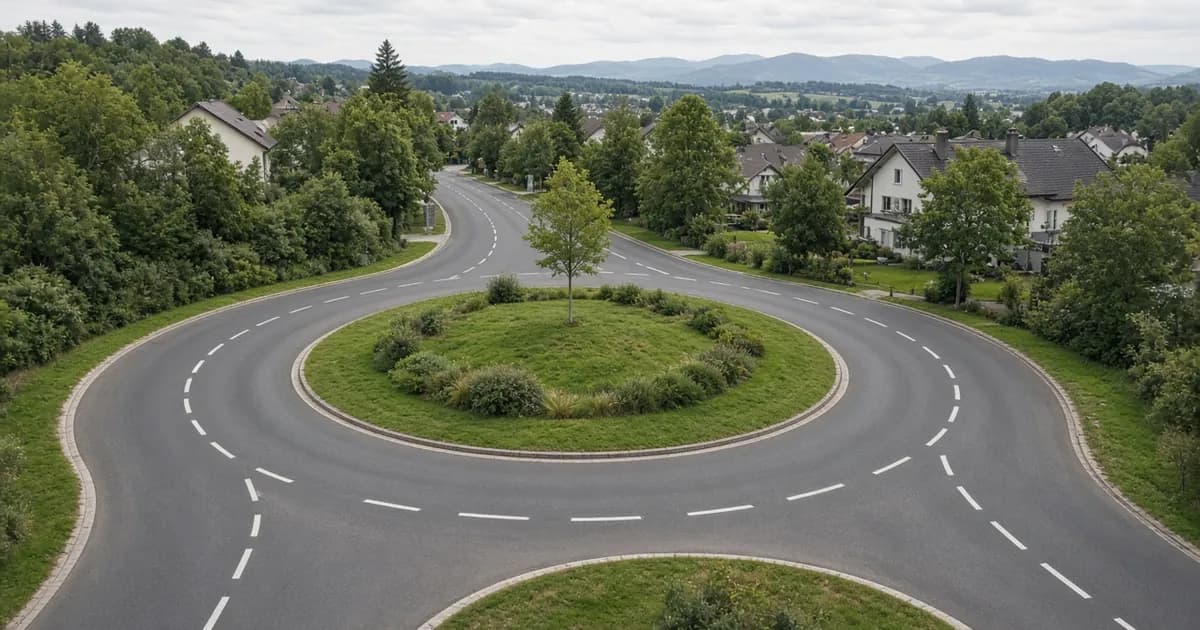
In a Swiss roundabout, exam framing is clear: vehicles already in the circle have priority. You yield rather than force entry. Classic “priority to the right” at uncontrolled junctions does not mean “whoever arrives from the right may barge in.”
- In the ring: priority over entering traffic.
- Entering: gap and speed – do not force it.
- Signs/markings: if the picture shows otherwise, follow what is shown.
Classic mistake: “I was first at the entry” while missing vehicles already circulating. Train pictures, not slogans.
Entering: wait, find a gap, usually no indicator
Signalling when entering confuses many candidates. Exam-typical:
- Usually enter without signalling (unless signs say otherwise).
- Focus on gap, speed and scanning – not habit from junction driving.
- Do not “signal right because I come from the right.”
If the exam image shows clear signs, follow the image. Local quirks are not blog mnemonics – check your road traffic office when unsure.
Exiting: signalling is required
When leaving the roundabout, exam framing expects you to signal in time, hold your lane and choose the exit. Common error points:
- Signalling too late or not at all.
- Last-second lane hops inside the ring.
- Missing pedestrians on the zebra at the exit.
Mnemonic: enter calmly / announce the exit.
Bikes and pedestrians at the roundabout
Bikes in the ring and pedestrians at exits appear often:
- Bikes: part of circulating traffic – do not “overlook because small.”
- Pedestrians: especially on zebras at entries/exits – stop and yield when they cross or clearly intend to.
- Poor sight: reduce speed before the conflict point.
More on pedestrian priority in Right of way Switzerland; stop lines/sight also in stopping and parking.
Multi-lane roundabouts – short and exam-focused
Multi-lane circles look harder but follow the same ideas:
- Priority in the ring remains.
- Choose the lane early for your exit.
- No panic lane changes at the last second.
- Read arrows and markings – often the key to the picture.
Signs and signalisation (overview)
Many roundabout items are really sign items. Principle: signs beat habit. For shapes and meanings use Swiss traffic signs – that article owns sign detail; this one keeps the sign detail there.
How to read roundabout pictures in the exam
- Signs first – panels, arrows, stop lines, zebras.
- Who is already in the ring?
- Entering or exiting? – signal where the situation requires it (typically exit).
- Pedestrians at the exit?
- Speed & sight – even with priority you must be able to stop.
Roundabout vs normal junction – the mental trap
Many mistakes happen because candidates treat a roundabout like a normal “priority to the right” junction. Exam framing is different:
- At many uncontrolled junctions, priority to the right applies – see Right of way Switzerland.
- In the roundabout: ring before entry. Traffic already circulating has priority.
- Signalling follows roundabout logic (announce the exit), not junction habit.
In simulations, if you catch yourself thinking “right first,” pause: Am I at a junction or at/in a roundabout? That one second often saves the error point.
Speed in the circle is not a magic number in this guide: exam-wise it means adapted, safe speed with eyes on gaps, sight and vulnerable road users.
Typical exam traps – and how to practise
- Entering with the indicator from habit.
- Exiting without signalling.
- Forcing priority against traffic in the ring.
- Ignoring pedestrians at the exit.
- Late lane changes in multi-lane circles.
Practise:
- Start with the demo.
- Mixed sets on learn the theory test online free.
- Full simulations via learn driving theory or pricing.
- Retry roundabout misses until scores stay calm.
Note: Details can vary by canton. When in doubt, ask your road traffic office – this article does not replace official guidance.
Ready to solve roundabout scenes calmly?
Priority in the ring, calm entry, clear exit signalling, bikes and pedestrians in mind – that is the exam core for Swiss roundabouts. Pair with Swiss traffic rules and right of way, and practise pictures.