Right of way Switzerland: theory exam rules
Right of way in Switzerland for the theory exam: priority to the right, pedestrians, trams, roundabouts & mountain roads – typical traps and how to practise scenarios.
Why right of way decides so many theory attempts
Right of way in Switzerland rarely fails because you “didn’t memorise enough” – it fails on picture questions: uncontrolled junctions, roundabouts, zebra crossings, trams, narrow mountain roads. Base theory tests exactly these patterns, often under time pressure. This guide stays exam-focused: the default rule, typical exceptions, and how to spot traps. Exam prep – not legal advice.
For the wider rules overview see Swiss traffic rules. Exam format: How many questions are in the theory exam? and the theory exam study plan.
Right of way is not a side topic: mixed simulations keep bringing junctions back. Getting stable here cuts error points – whether you sit the car, motorcycle or moped theory.
Default rule: priority to the right (and when it does not apply)
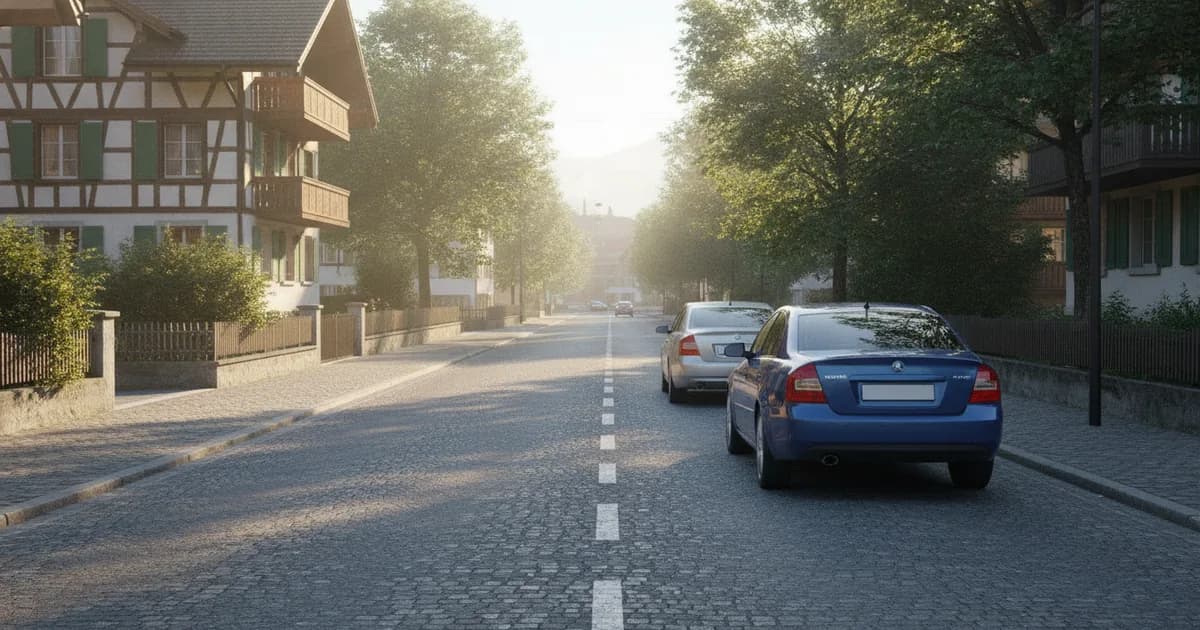
At many uncontrolled junctions in Switzerland, priority to the right applies: traffic from the right goes first – unless something else applies. For the exam, learn the exceptions as carefully as the default:
- Signs and markings assign priority (e.g. stop, give way, traffic lights) – then “right first” is not automatic.
- Police / hand signals override the usual priority pattern.
- Special road users and places (pedestrians, trams, roundabouts, mountain roads) have their own exam patterns – see below.
Classic mistake: you only watch “your right” and miss a sign or a privileged road user. Train situations, not slogans.
Another exam tip: “I arrived first” does not replace priority to the right. Arrival order is not a free pass when someone comes from the right and no sign says otherwise.
Pedestrians & zebra crossings
Pedestrian priority in Switzerland is a frequent exam topic. At a zebra crossing, pedestrians who are crossing or clearly about to cross have priority – you must stop and must not endanger or obstruct them. Common traps:
- Pedestrian at the kerb clearly intending to cross – do not “squeeze through”.
- Several pedestrians / oncoming traffic: wait until it is safe.
- Poor visibility (parked cars, bend): reduce speed before the crossing – linked to stopping and parking.
Away from a crossing, “pedestrians always first everywhere” is not a free-floating rule without context – exam images are usually clear. Read the scene.
Even with a green light or an apparently empty road: if pedestrians are already on the crossing, protection beats rushing. The theory rewards understanding, not “who pushes through”.
Trams, buses and public transport
Tram priority and bus situations often appear as images. For practice: rail vehicles and public transport frequently take precedence or must not be obstructed – especially at stops and when leaving them. In the exam:
- Do not force “my priority to the right” against a tram at a junction.
- Give space to a bus leaving a stop where that rule applies.
- Crossing tracks: ensure no tram is approaching – speed and scanning matter.
Line-specific details do not belong in a blog mnemonic. When unsure, follow the signs shown and the safest lawful action.
Roundabouts: who has priority, when to signal?
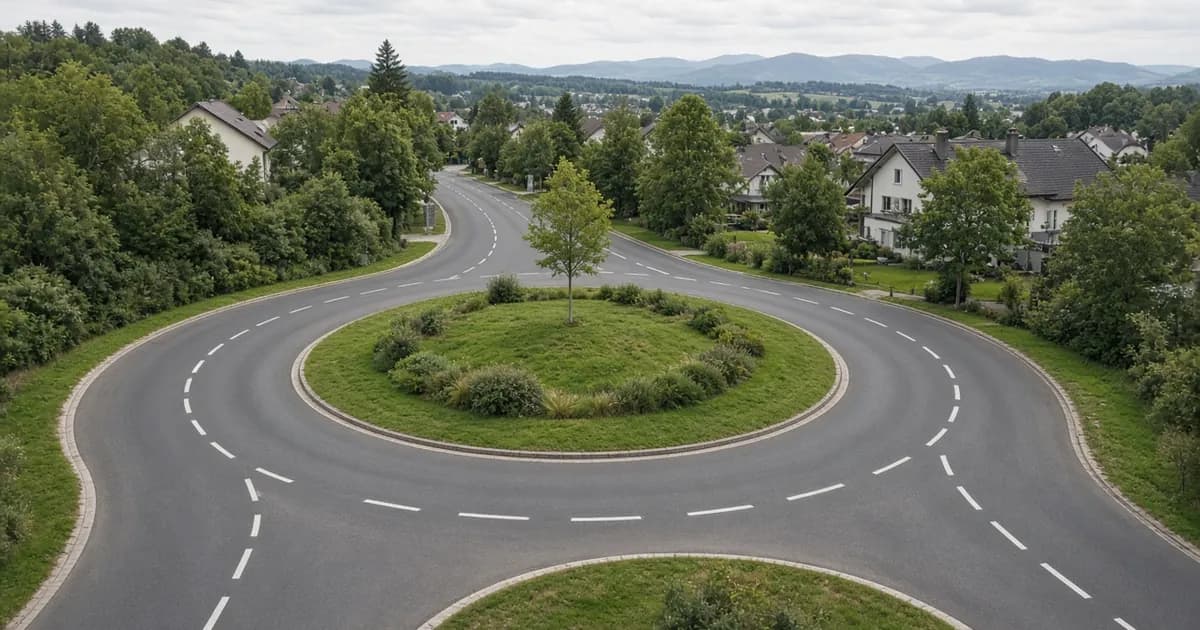
Roundabout priority in Switzerland is almost always exam-relevant. Compact scheme:
- Priority: traffic already in the roundabout has priority. You yield rather than force entry.
- Entering: usually without signalling (unless signs say otherwise) – focus on gap and speed.
- Exiting: signal in time, hold your lane, watch pedestrians at the exit.
Common error points: signalling too late, unnecessary lane changes inside, or missing the zebra at the exit. Drill roundabout images in simulations.
Multi-lane roundabouts look harder but follow the same idea: priority in the ring, clear intent when leaving, no last-second lane hops.
Uphill traffic and narrow roads
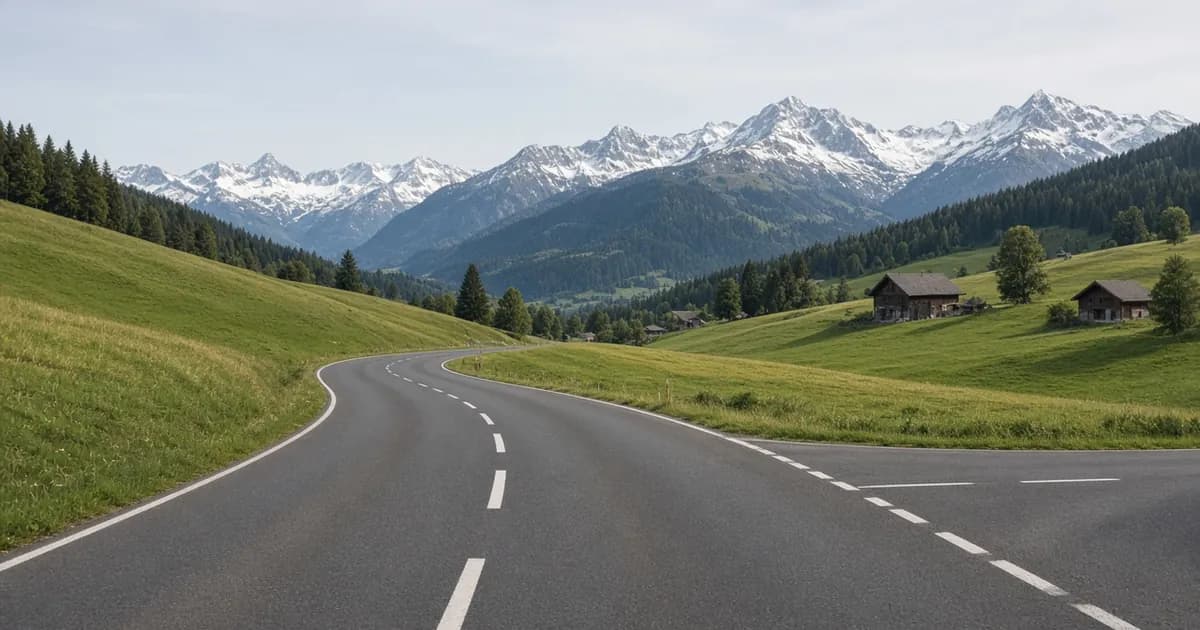
On typical mountain-road exam scenes, vehicles going uphill have priority over those going downhill when passing is tight. The downhill driver looks for a suitable place to wait. Exam tips:
- Do not override a clear uphill/downhill picture with “I was first”.
- Reduce speed early and aim for a passing place.
- Trailers, buses or limited sight make it harder – safety before haste.
This is exam practice language, not a substitute for local alpine guidance. In theory questions, the pictured slope and bottleneck matter.
Signs that assign priority (overview)
Many right-of-way questions are really sign questions: stop, give way, priority road, lights. Simple principle: signs beat habit-based priority to the right. For shapes and meanings use Swiss traffic signs – that article owns the sign detail; this one keeps the sign detail there.
If you see parked vehicles, stop lines or sight limits, also think stopping and parking.
How to read right-of-way pictures in the exam
Many mistakes happen because the image is scanned too fast. In simulations, take two deliberate seconds in a fixed order:
- Signs first – lights, stop, give way, arrows, stop line.
- Who is already moving? – vehicle in the roundabout, pedestrian on the zebra, tram on the tracks.
- Only then “priority to the right” – if nothing else applies.
- Speed & sight – even with priority you must be able to stop.
If you hesitate between two answers, pick the option that endangers nobody and follows the visible signs. The exam rewards calm, lawful behaviour – not the fastest impulse.
Typical exam traps – and how to practise
- Staring only at “the right” – missing a sign, tram or pedestrian.
- Roundabout + zebra – correct in the ring, risky at the exit.
- Mountain vs “I arrived first” – ignoring the picture rule.
- Priority without stopping distance – legally first, but sight/speed fail.
Practise like this:
- Start with the demo and scan scenario items.
- Use mixed sets on learn the theory test online free.
- Move to full simulations via learn driving theory or pricing.
- Retry right-of-way misses until scores stay calm.
Note: Organisational details can vary by canton. When in doubt, ask your road traffic office – this article does not replace official guidance.
Ready to solve right-of-way scenes calmly?
Priority to the right as default, then signs and special cases (pedestrians, tram, roundabout, mountain) as patterns – that is the exam core. Pair it with Swiss traffic rules and practise pictures, not buzzwords.