Speed limits Switzerland: theory exam Tempolimits
Swiss speed limits for the theory exam: 50 in built-up areas, 80 outside, 120 on motorways, expressways, Zone 30 – typical traps and how to practise.
Why speed limits cost points in the theory exam
Speed limits in Switzerland rarely fail because you forget “motorway = fast” – they fail on picture questions: Which limit applies here? Built-up area or outside? Numbered sign or default? Zone 30 or encounter zone? Base theory tests exactly these patterns under time pressure. This guide stays exam-focused: standard limits by road type, typical traps and what applies when a sign shows a number. Exam prep – not legal advice, no invented fines.
Important: this post is about Tempolimits / speed limits by road type, not the full catalogue of static road signs. Sign shapes and meanings (including speed panels) live in Swiss traffic signs. Rules hub: Swiss traffic rules. Exam format: How many questions? and the theory exam summary.
Speed items keep returning in mixed simulations — car, motorcycle or moped. Calm reading of road type, signs and zones cuts error points. You need the repeating patterns, not every local quirk memorised.
Standard limits: built-up areas, outside towns, motorway, expressway
Exam framing for Swiss Tempolimits (soft mnemonics – always read signs and the picture):
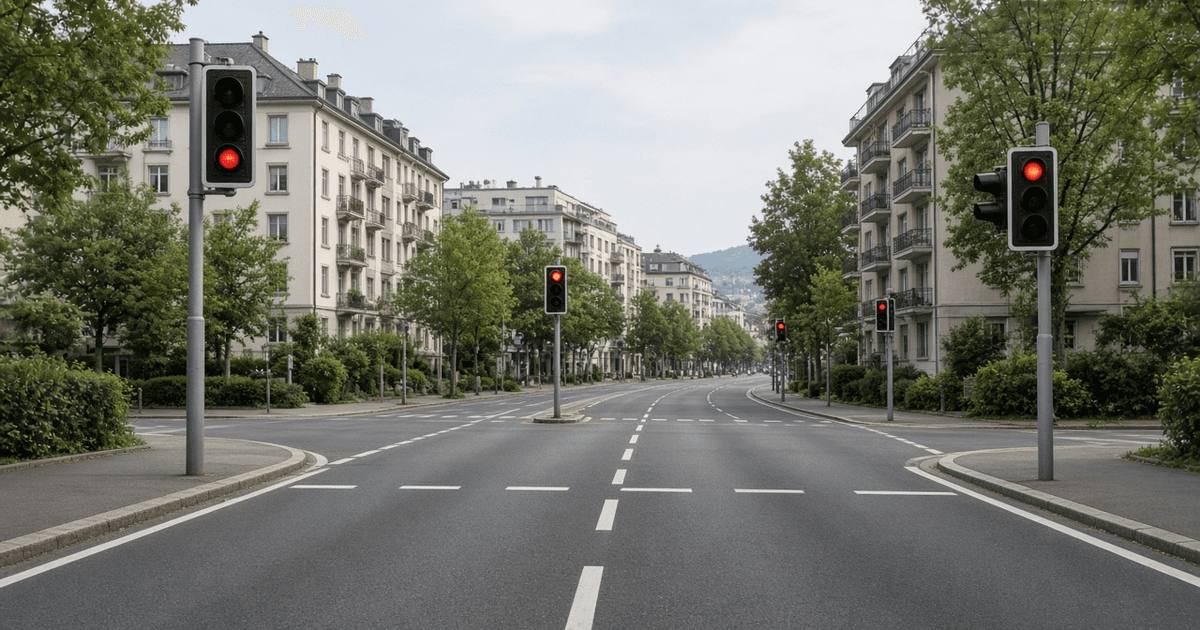
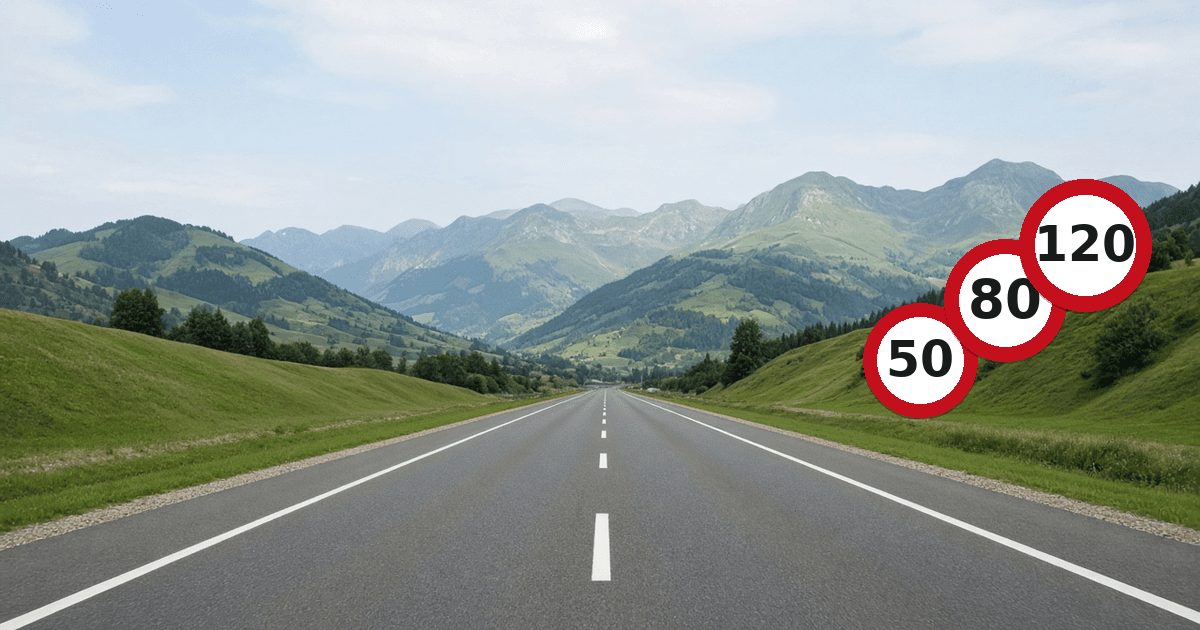
- Built-up areas (Innerorts): typically 50 km/h unless signs say otherwise.
- Outside built-up areas (not motorway/expressway): typically 80 km/h.
- Motorway (Autobahn): typically 120 km/h.
- Expressway (Autostrasse): often 100 km/h – exam-wise, distinguish from the motorway default; check signs and road type in the picture.
Mnemonic: scan place and road type first (town entry, place-name signs, motorway/expressway character), then your speed. The exam rewards calm reading – not “empty road, accelerate.”
Classic mistake: bringing “motorway feel” onto an expressway or rural road and missing a lower limit. Train pictures with place signs, speed signals and road character – not only four numbers.
Numbered signs vs “no speed signal”
A signal with a number is an exam classic:
- A visible speed signal with a number sets the limit for the shown area – exam framing: follow the picture, not the default “because I know Innerorts is 50.”
- Without a speed signal, the default by road type applies (built-up / outside / motorway / expressway) – unless the picture shows otherwise.
- End of a speed zone or leaving a town: the limit often changes – read what the picture shows.
Common error points: applying the default while a sign shows something else; “carrying” an old limit after the situation changed; staring only at the road and missing the panel. More on sign shapes: Swiss traffic signs.
Note: Details can vary by picture and signalisation. This article does not replace official guidance – ask your road traffic office when unsure.
Zone 30, encounter zones & typical traps
Zone 30 and related low-speed zones are exam traps:
- Zone 30: inside the zone the signed speed applies – not “still like Innerorts 50.”
- Encounter zone (Begegnungszone) and similar low-speed zones: exam framing often even slower, with special care for pedestrians and bikes – read the picture and signs, do not guess.
- Signed vs default: classic trap – you see “town” and think 50, but miss the Zone 30 or encounter-zone panel.
Do not “push aside” pedestrians and bikes in speed zones. More on priority: Right of way Switzerland. Lights only lightly if speed and signals meet – depth in Swiss traffic lights. Roundabouts: adapted safe speed, no magic number – see Swiss roundabouts.
Trailers, trucks, motorhomes — brief and exam-focused
Some pictures show trailers, heavy vehicles or motorhomes. Exam framing:
- First check whether a special speed signal or vehicle class is relevant in the picture – do not assume “same as a car” by default.
- Do not memorise invented special limits here: if the exam wants something specific, it is in the signs or the question.
- Adapt speed to sight, load and braking distance – even without a number on a sign.
Speed, braking distance & gap
Speed ties closely to braking distance and a safe gap – without inventing formulas:
- Higher speed → longer stopping distance; wet or unclear roads → reduce earlier.
- Gap to the vehicle ahead: enough that you can still stop safely – vehicle basics in vehicle basics for the theory exam.
- No invented gap numbers or “metres-per-speed” formulas in this article – the exam rewards situational understanding.
Mnemonic: read the limit → think braking distance → keep a gap.
How to practise speed questions efficiently
- Where am I? – built-up, outside, motorway, expressway, zone?
- Is there a numbered speed signal? – yes → number applies; no → default by road type.
- Has the situation changed? – place sign, end of zone, new road type.
- Pedestrians / bikes / sight? – often the hidden trap beside the number.
- Braking distance & gap – even with the “right” limit you must be able to stop.
Practise:
- Start with the demo.
- Mixed sets on learn the theory test online free.
- Full simulations via learn driving theory or pricing.
- Retry Zone 30, expressway and “sign with number” misses until scores stay calm.
Note: Details can vary by canton. When in doubt, ask your road traffic office – this article does not replace official guidance.
Ready to solve speed scenes calmly?
Know standard limits by road type, prefer numbered signs over defaults, do not confuse Zone 30 with Innerorts 50, keep braking distance and gap in mind – that is the exam core for Swiss speed limits / Geschwindigkeitsbegrenzung. Pair with Swiss traffic rules, traffic signs, right of way, traffic lights and vehicle basics, and practise pictures.