Overtaking in Switzerland: rules for the theory exam
Overtaking in Switzerland for the theory exam: when allowed, right-side passing on motorways, safety line, buses & overtaking bans – typical traps and how to practise.
Short answer — when may you overtake?
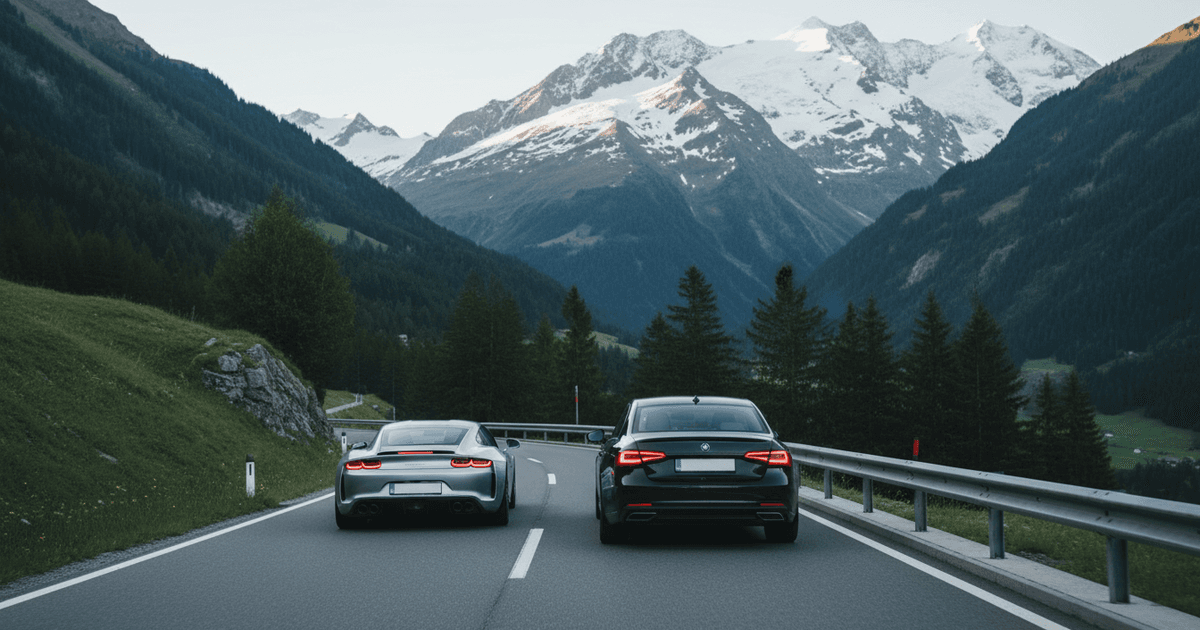
For overtaking in Switzerland, the theory exam mainly tests situational judgement: May you pass on the left? Is the road clear? Is there an overtaking ban? Is there a continuous safety line? This short answer is for skimming – the sections below cover exam traps.
- Principle: Overtaking is allowed only when sight, oncoming traffic, speed and lane choice make it safe – and nothing (signal, marking, situation) says otherwise.
- Normally on the left: In Switzerland you normally overtake on the left; free “just pass on the right” is often wrong in exam framing.
- Motorway / expressway: In dense column traffic on several lanes you may stay in your lane and pass vehicles on your left – that is not the same as free right overtaking on an open road.
- Stop signals: With an overtaking ban and a continuous safety line (Sicherheitslinie): do not overtake / do not cross the line – details in Swiss traffic signs.
Rules hub: Swiss traffic rules. Speed while overtaking and limits by road type: Swiss speed limits.
Basic overtaking rules
Base theory rarely tests overtaking as a definition – it tests pictures: Is the situation clear? Are you endangering anyone? Soft exam framing – not a statute text.
Sight, oncoming traffic, speed, lane choice
- Sight: You must see far enough – bends, crests, narrow places and unclear spots are classic “do not overtake” scenes.
- Oncoming traffic: Do not endanger anyone or force them aside; overtake only when the needed space is clearly free.
- Speed: You need enough speed difference and must rejoin safely afterwards – without breaking the limit. More on Tempolimits: Swiss speed limits.
- Lane: Change lane in time, keep a gap, rejoin after overtaking – do not cut in or force tiny gaps.
Overtaking ban and when it ends
An overtaking ban (Überholverbot) (as a signal or clear from the situation) means exam-wise: you must not overtake while it applies. You recognise the end from the matching signalisation or picture context – not from “there is space now”. Sign shapes belong in Swiss traffic signs; mnemonic here: signal and marking before habit.
Safety line and road markings
The Sicherheitslinie (continuous centre line) is an exam classic: you generally must not cross it to overtake. Broken lines allow a lane change/overtake only if the situation is otherwise safe. Trap: you see an “empty road” but miss the continuous line. Read marking and picture – do not guess.
Note: This article is exam prep, not legal advice. Details can vary by picture and signalisation; when unsure, ask your road traffic office (Strassenverkehrsamt).
Overtaking on the right in Switzerland — what really applies?
Rechts überholen is one of the densest search and exam clusters – and the most common mix-up. Remember motorway/expressway vs built-up areas.
Motorway / expressway (columns vs open road)
- Column traffic: When several lanes on a motorway or expressway move densely in parallel, you may stay in your lane and pass vehicles on your left by coming past on the right – often framed as allowed passing in column traffic.
- Open road: On an open motorway “starting from the right to overtake” because the left seems “too slow” is usually wrong in exam framing. Normal overtaking stays left; lane discipline and adapted speed count.
- Expressway (Autostrasse): Check the same logic as the motorway – picture, lanes, density. Speed defaults: Swiss speed limits.
Built-up areas (Innerorts)
Overtaking in built-up areas means exam-wise: normally on the left, with care for pedestrians, bikes, parked cars and tight sight. Free right overtaking “because there is space” is a typical error. Special cases (e.g. a vehicle clearly turning left and leaving space on the right) you read from the picture – not from an invented exception list.
Typical exam traps (“may I pass on the right?”)
- “The left is free, so I may overtake on the right” – often wrong outside clear column situations.
- “Motorway = always allowed to pass on the right” – too blunt; density and lane context decide.
- “The line does not matter if nobody is coming” – safety line and overtaking ban still count.
Special situations
Bus at a stop / overtaking a bus
Overtaking a bus in Switzerland: At the stop, extra care – passengers, doors, sight. Exam framing: do not squeeze past, think of pedestrians, read the bus signals/indicators. When a bus has priority or exit help ties to right-of-way patterns – see Right of way Switzerland. No invented fine amounts here.
Trams and rail vehicles
Trams and rail vehicles often have special protection or priority. Tight overtaking at tracks, junctions or stops is a classic risk picture. Keep it short and, when unsure, reread priority logic: Right of way Switzerland.
Narrow places, bends, crests, unclear spots
Unclear = often no overtaking. Narrow place, tight bend, crest: you see oncoming traffic or the end of the manoeuvre too late. The exam rewards “wait”, not “hopefully it works”.
Overtaking despite an overtaking ban — why exams ask this
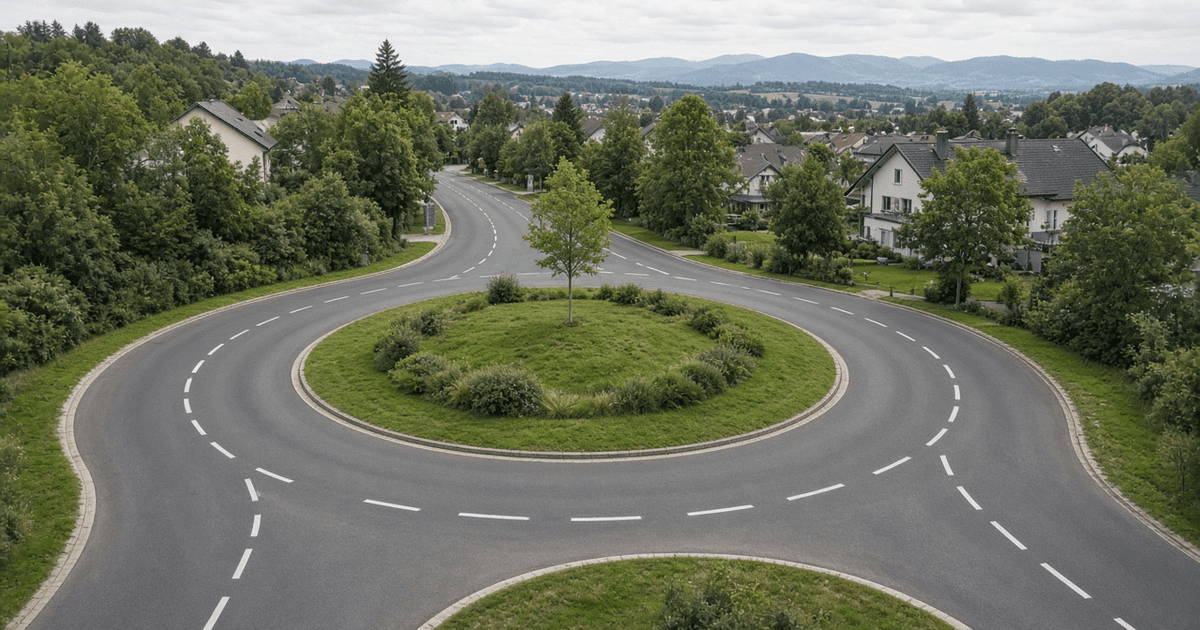
Questions on Überholverbot test whether you prefer signal and marking over the impulse “clear road”. Even without a visible ban sign, the situation (line, sight, traffic) can forbid overtaking. Roundabouts and overtaking rarely mix well – wanting to “overtake” in the ring is often wrong; roundabout rules: Swiss roundabouts.
Gap and speed while overtaking
Overtaking needs a gap to the vehicle ahead before the lane change, enough speed difference during the manoeuvre, and a safe gap again afterwards – without invented “metres-per-speed” formulas. Wet road, trailer or poor sight → abort earlier rather than force it. Tempolimits and braking-distance thinking: Swiss speed limits. A dedicated safety-gap guide may follow later; here: keep a gap, read the speed, manoeuvre only when clearly safe.
Typical theory questions around overtaking
No copyrighted exam dumps – only rule explanations:
- “May I overtake on the right on the motorway?” – In dense columns on parallel lanes you may often come past on the right in your lane; free right overtaking on an open stretch is usually wrong.
- “The safety line is continuous – may I still?” – Generally no: do not cross the safety line to overtake.
- “In town there is space on the right – enough?” – Usually no; overtaking normally left, read the situation and vulnerable users.
- “Bus at the stop – quick past?” – No: care, passengers, priority/exit context.
- “Bend / crest, but nobody visible – overtake?” – Unclear → often wait; sight must cover the manoeuvre.
- “Overtaking-ban sign, but the vehicle ahead crawls – still?” – The ban applies; patience over impulse.
How to practise overtaking topics online for free
Many errors happen because the picture is scanned too fast. Take two seconds in the simulation:
- Marking / signal? – safety line, overtaking ban, lane arrows.
- Where am I? – built-up, outside, motorway, expressway; column or open?
- Sight & oncoming? – bend, crest, narrow place.
- Bus / tram / pedestrians? – often the hidden trap.
- Gap & speed – manoeuvre only if you can rejoin safely.
Practise:
- Start with the demo.
- Mixed sets on learn the theory test online free.
- Full simulations via learn driving theory or motorcycle on Motorcycle theory course.
- Light upsell if needed: pricing.
Note: Details can vary by canton. When in doubt, ask your road traffic office – this article does not replace official guidance.
FAQ
May you overtake on the right in Switzerland?
In principle overtaking is on the left. On motorway/expressway in dense column traffic you may often come past on the right in your lane. Free right overtaking “because it is faster” is usually wrong in exam framing – especially in built-up areas.
What does the safety line mean for overtaking?
You generally must not cross the continuous safety line to overtake. Broken lines allow a lane change only if the situation is safe. Sign catalogue: Swiss traffic signs.
May you overtake a bus?
Not a blunt “yes” or “never”: at the stop, extra care, think of passengers and a possible bus exit. Priority patterns: Right of way Switzerland.
What is the difference motorway vs built-up areas?
Built-up: overtaking normally left, tight sight and vulnerable users. Motorway/expressway: plus the column logic for “passing on the right” in dense parallel traffic – do not confuse with free right overtaking.
Ready to solve overtaking scenes calmly?
Check sight and oncoming traffic, take overtaking bans and the safety line seriously, think “right” only in a clear column context on motorway/expressway, do not push buses and trams aside – that is the exam core for overtaking in Switzerland. Pair with Swiss traffic rules, traffic signs, speed limits and right of way, and practise pictures. Stable overtaking under time pressure cuts error points – whether the next simulation is car, motorcycle or moped.