Warning triangle in Switzerland: distance, rules & what to do after a breakdown
Warning triangle rules in Switzerland: 50 m or 100 m, when to set it up, hazard lights, the motorway hard shoulder and common theory-test traps.
Short answer: what to do after a breakdown in Switzerland
If your car breaks down, you must warn other road users in good time. For the theory test, know these rules:
- The warning triangle (legally the "breakdown signal") must be easily accessible in the vehicle (Art. 23 para. 1 VRV).
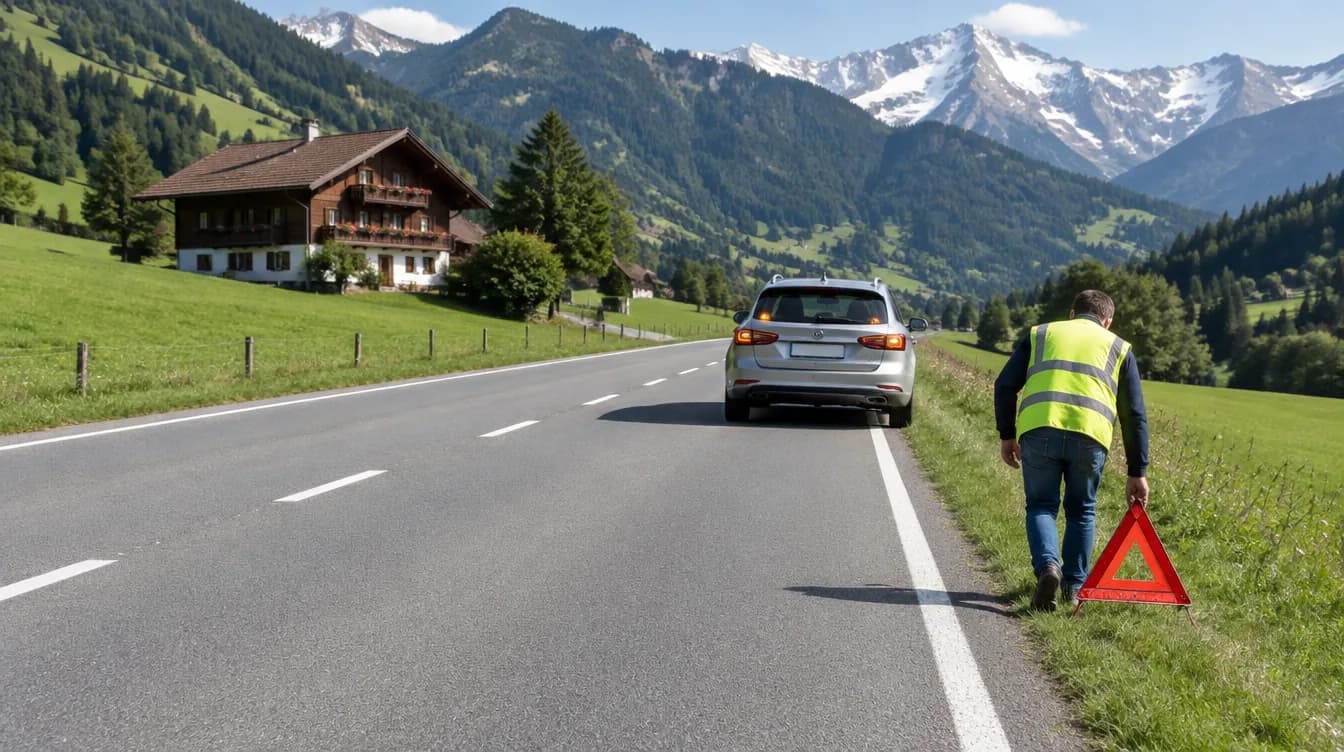
- If your vehicle has to stand on the carriageway or on the hard shoulder, place the triangle at least 50 m behind it, or at least 100 m on roads with fast traffic (Art. 23 para. 2 VRV).
- On the hard shoulder, the triangle goes at its right-hand edge.
- Switch on the hazard lights in addition to the triangle, not instead of it (Art. 23 para. 3 VRV).
- On motorways and expressways, the hard shoulder is for emergency stops only, and occupants must not step onto the carriageway (Art. 36 para. 3 VRV).
Is a warning triangle compulsory?
Yes. Motor vehicles wider than 1.00 m must carry an approved, marked warning triangle (Art. 90 para. 2 VTS), so every ordinary car needs one. Motorcycles, motorcycles with sidecars, pedestrian-controlled vehicles and tracked vehicles are exempt. Before driving off, you must check that required equipment such as the breakdown signal is on board (Art. 57 para. 1 VRV).
When must you set it up?
As soon as a vehicle has to be left on the carriageway for compelling reasons, and to mark a vehicle stopped on the hard shoulder (Art. 23 para. 2 VRV). Exception: you do not need it at a signposted lay-by for broken-down vehicles (signal 4.16). When stopping and parking are allowed at all is explained in stopping and parking in Switzerland.
50 m or 100 m?
At least 50 m on normal roads and at least 100 m on roads with fast traffic such as motorways and expressways. "At least" matters: before a bend or crest, place it where following traffic sees it in time. Stopping distances are covered in safe following distance in Switzerland.
Hazard lights: in addition, not instead
Hazard lights may only be used to warn of danger: on a stationary vehicle in addition to the warning triangle (and on a marked school bus while pupils get on or off), and on a moving vehicle, for example before an unexpected accident scene, a traffic jam, or when towing on motorways and expressways (Art. 23 para. 3 VRV).
Breakdown on the motorway
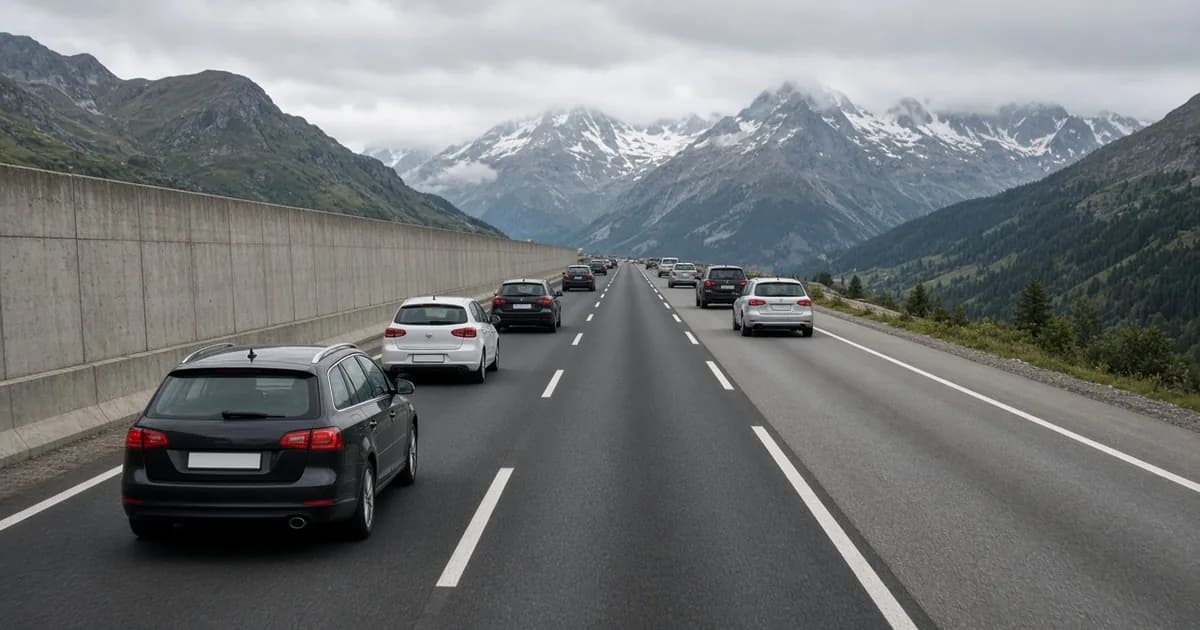
- Hazard lights on and, if possible, roll to the next lay-by or fully onto the hard shoulder.
- Put on a high-visibility vest before getting out, if you have one.
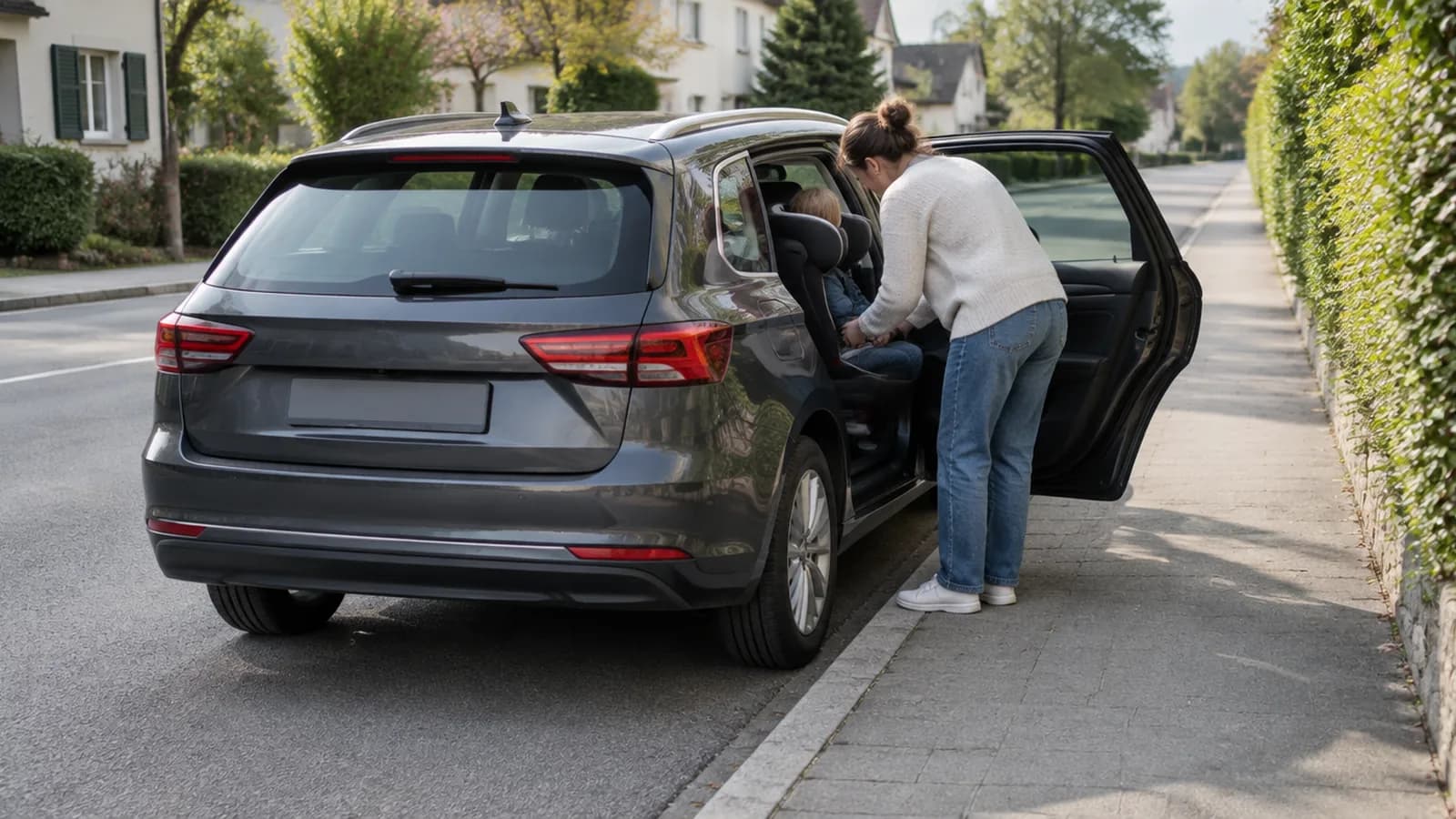
- Get out on the right, away from traffic, and take all passengers behind the crash barrier.
- Place the triangle at least 100 m behind the vehicle at the right edge of the hard shoulder.
- Wait for help behind the barrier. Turning and reversing on the motorway are prohibited (Art. 36 para. 1 VRV).
If traffic backs up, emergency vehicles need a clear path, see emergency corridor in Switzerland. If you get stuck on a level crossing, read level crossings in Switzerland.
Towing, minor defects and spilled load
- Towed vehicles must also display the warning triangle at the rear (Art. 23 para. 6 VRV).
- With minor defects you may drive on with extra care, but must arrange repairs without delay (Art. 57 para. 3 VRV).
- If you soil the road, warn other road users and arrange quick cleaning (Art. 59 VRV).
Emergency numbers: 117 police, 144 ambulance, 118 fire service, 112 European emergency number.
Common test traps
- Hazard lights alone are not enough on a stationary vehicle.
- No triangle needed at a signposted lay-by for broken-down vehicles.
- The hard shoulder is not for phone calls or breaks.
- Motorcycles do not have to carry a warning triangle.
Practise with more than 1,200 Swiss theory questions, each with an explanation. Start with the free demo, try free online practice or unlock 60 days for CHF 19.95. All basic rules: Swiss traffic rules, signs: Swiss road signs.
Sources
- Traffic Rules Ordinance (VRV, SR 741.11): Art. 21, 23, 36, 57, 59
- Ordinance on Technical Requirements for Road Vehicles (VTS, SR 741.41): Art. 90 para. 2