Traffic lights Switzerland: theory exam rules
Swiss traffic lights for the theory exam: red, amber, green, flashing amber, arrows, failed lights – typical traps and how to practise.
Why traffic lights cost points in the theory exam
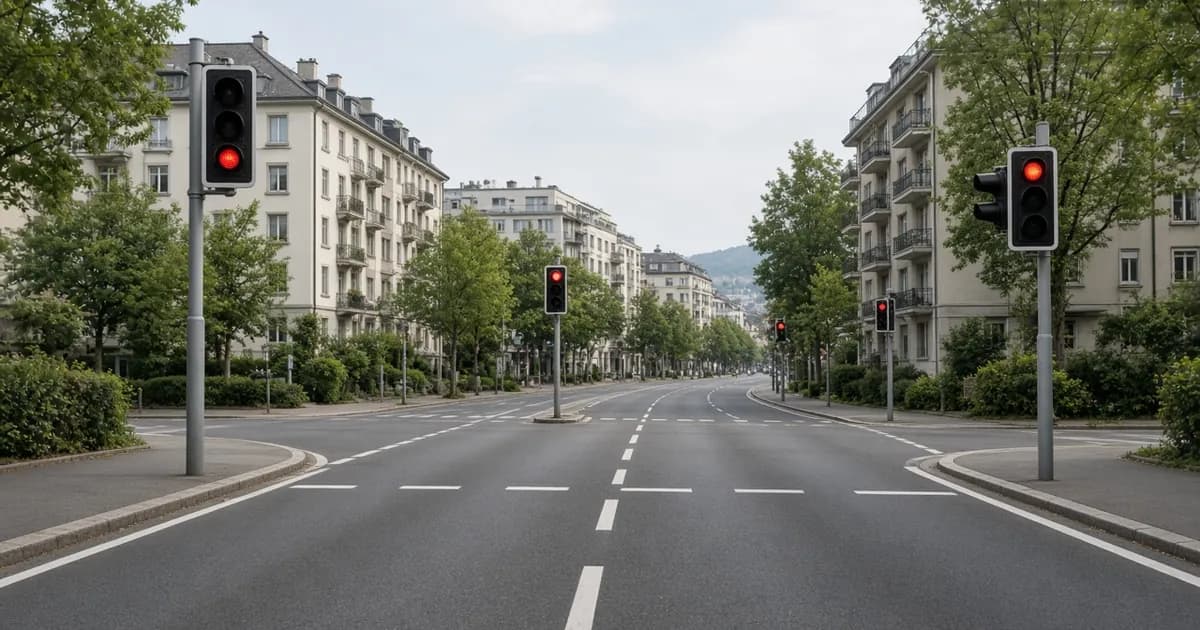
Traffic lights in Switzerland rarely fail because you forget “red = stop” – they fail on picture questions: amber phase, flashing amber, directional arrows, failed lights, pedestrian signals. Base theory tests exactly these patterns under time pressure. This guide stays exam-focused: colours, traps and what applies when the lights are dark. Exam prep – not legal advice.
Important: this post is about lights / signals, not the catalogue of static road signs. Sign shapes and meanings live in Swiss traffic signs. Rules hub: Swiss traffic rules. Exam format: How many questions? and the theory exam study plan.
Light items keep returning in mixed simulations — car, motorcycle or moped. Calm reading of colours, arrows and “lights out” cuts error points. You need the repeating patterns, not every local quirk memorised.
The basic colours: red, amber, green
Exam framing for Swiss traffic lights:
- Red: stop before the stop line / signal – do not “sneak through”.
- Green: you may proceed if the roadway is clear and the situation is safe – green is not a licence to push.
- Amber (steady): classic trap – see next section.
Mnemonic: scan signal and stop line first, then your speed. Even on green you must be able to stop if someone is still clearing the conflict area or pedestrians are crossing.
Classic mistake: staring only at the colour and missing an arrow, a second head for your lane, or a pedestrian still crossing. Train pictures, not only three colours.
Amber and flashing amber – typical traps
Steady amber and flashing amber are exam classics:
- Steady amber: stop if you can still stop safely. If you cannot stop safely, proceed carefully – do not accelerate “to make it”.
- Flashing amber: proceed with special care – attention, adapted speed, priority and sight in mind. Do not treat it like a full green release.
Common error points: accelerating on amber; reading flashing amber as normal green; crossing the stop line on amber when stopping was still possible. In simulations, deliberately retry amber scenes until reactions stay calm.
Note: Details can vary by picture and signalisation. This article does not replace official guidance – ask your road traffic office when unsure.
Arrows and combined signals
Arrow signals test whether you read direction, not only colour:
- A green arrow usually releases only the shown direction – not “everything allowed”.
- A red or amber arrow applies to that direction: stop or amber logic for that movement only.
- Combined heads (full circle + arrow, several aspects): check which signal belongs to your lane and intention.
Exam tip: also read lane arrows and road markings. Missing the arrow head while watching the “big” light costs points. More on static signs in Swiss traffic signs.
When the lights have failed (priority / junction)
Failed / dark lights: exam framing treats the junction as an uncontrolled junction – normal right-of-way rules apply again (e.g. priority to the right unless signs say otherwise). Police or hand signals override when shown in the picture.
Depth on priority: Right of way Switzerland. Roundabouts only lightly if the image shows one without working lights – depth in Swiss roundabouts.
- Do not assume “it was green earlier, so I continue”.
- Do not assume everyone else “knows” who has priority – speed and scanning matter.
- Extra signs (stop, give way) still apply if shown.
Mnemonic: lights dead → read priority.
Pedestrians & bikes at traffic lights
Short and exam-focused:
- Pedestrian lights: their own red/green. Even if you have green: people already on the crossing are not “pushed aside”.
- Bikes: same or separate signals – do not forget the cycle lane or waiting area.
- Car green while pedestrians are still on the stripe: clear the conflict, do not push.
More on pedestrian priority: Right of way Switzerland. Stop lines also relate to calm approaches – optional stopping and parking.
How to practise light questions efficiently
- Which light applies to me? – lane, arrow, intended direction.
- Colour / flash mode – red, amber, green, flashing amber, out?
- Stop line & conflict area – can I still stop safely?
- Pedestrians / bikes / second signal group – often the hidden trap.
- If dark: priority logic instead of light habit.
Practise:
- Start with the demo.
- Mixed sets on learn the theory test online free.
- Full simulations via learn driving theory or pricing.
- Retry amber, arrow and “lights out” misses until scores stay calm.
Note: Details can vary by canton. When in doubt, ask your road traffic office – this article does not replace official guidance.
Ready to solve traffic-light scenes calmly?
Read colours correctly, do not confuse amber and flashing amber, assign arrows to your direction, apply priority when lights fail, keep pedestrians in mind – that is the exam core for Swiss traffic lights. Pair with Swiss traffic rules, traffic signs and right of way, and practise pictures.