Following distance in Switzerland: rules & rules of thumb for the theory exam
Following distance in Switzerland for the theory exam: 2-second rule, motorway & built-up areas, braking, reaction and stopping distance with teaching formulas – typical traps and how to practise.
Short answer — how much distance do you need?
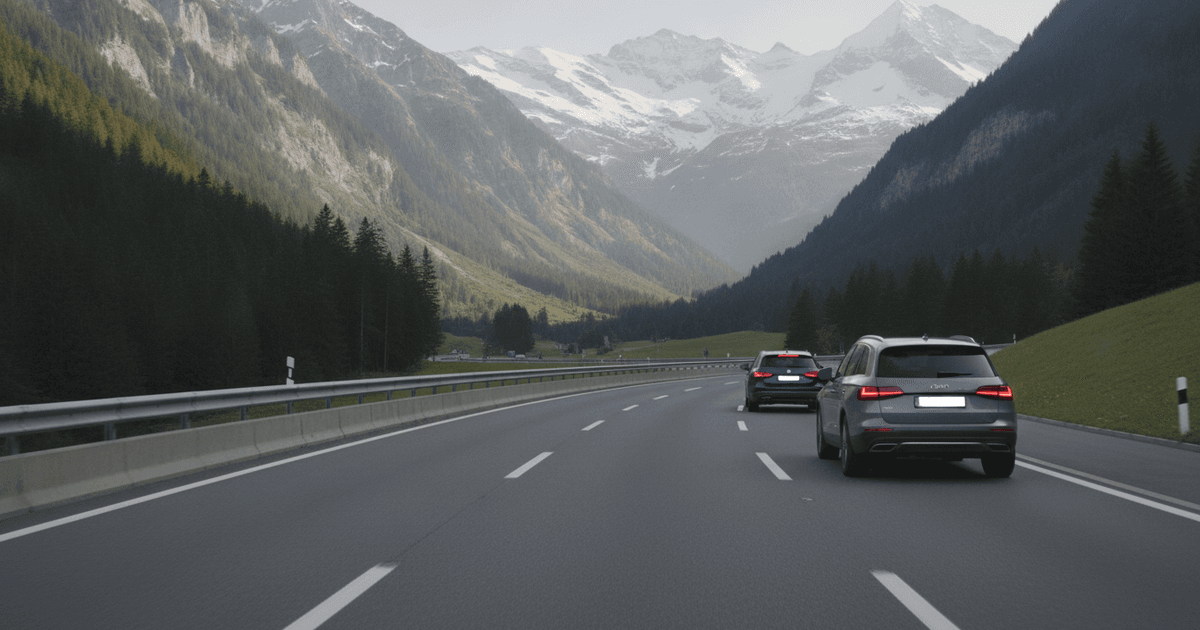
For following distance in Switzerland, the theory exam mainly tests situational judgement: Can you see enough? Can you react in time? Does the gap match speed and road? This short answer is for skimming – the sections below cover teaching formulas and exam traps.
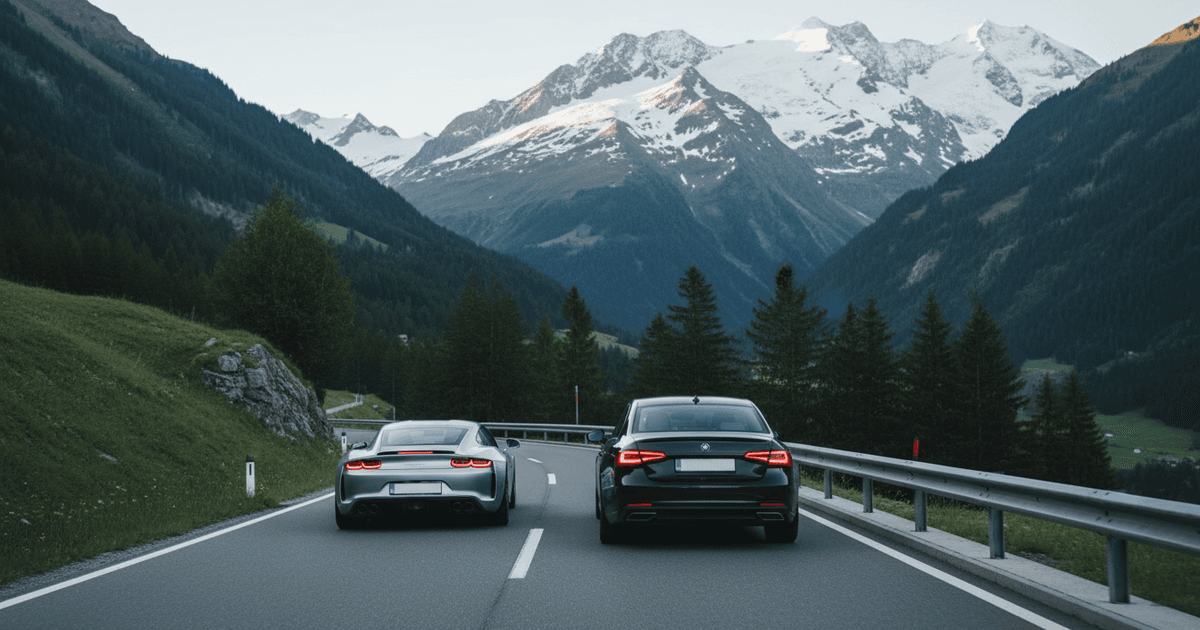
- Principle: Keep enough distance so you can still stop safely if the vehicle ahead brakes suddenly – sight, reaction time and speed all matter.
- 2-second rule: At least two seconds to the vehicle ahead is the common teaching aid; in wet, snow, fog, night or with a trailer you need clearly more.
- Distance rule of thumb (teaching aid): Many theory courses use “half the speedometer” in metres (e.g. 100 km/h → about 50 m) – a exam / learning aid, not lab physics.
- Stopping distance: reaction distance + braking distance; doubling speed lengthens braking distance sharply – see Swiss speed limits.
Rules hub: Swiss traffic rules. Gap while overtaking: Overtaking in Switzerland.
What does following distance mean in Switzerland?
Sicherheitsabstand (following / safety distance) is the gap to the vehicle ahead that leaves you time and space to react and brake – without endangering those behind. Base theory rarely asks for one fixed metre figure for every scene; it tests whether the gap fits speed and sight.
Sight, reaction time, speed
- Sight: In poor visibility (fog, rain, night, glare) you need more distance – you see brake lights and hazards later.
- Reaction time: Between “noticing” and “braking” time passes; in that time you still roll (reaction distance).
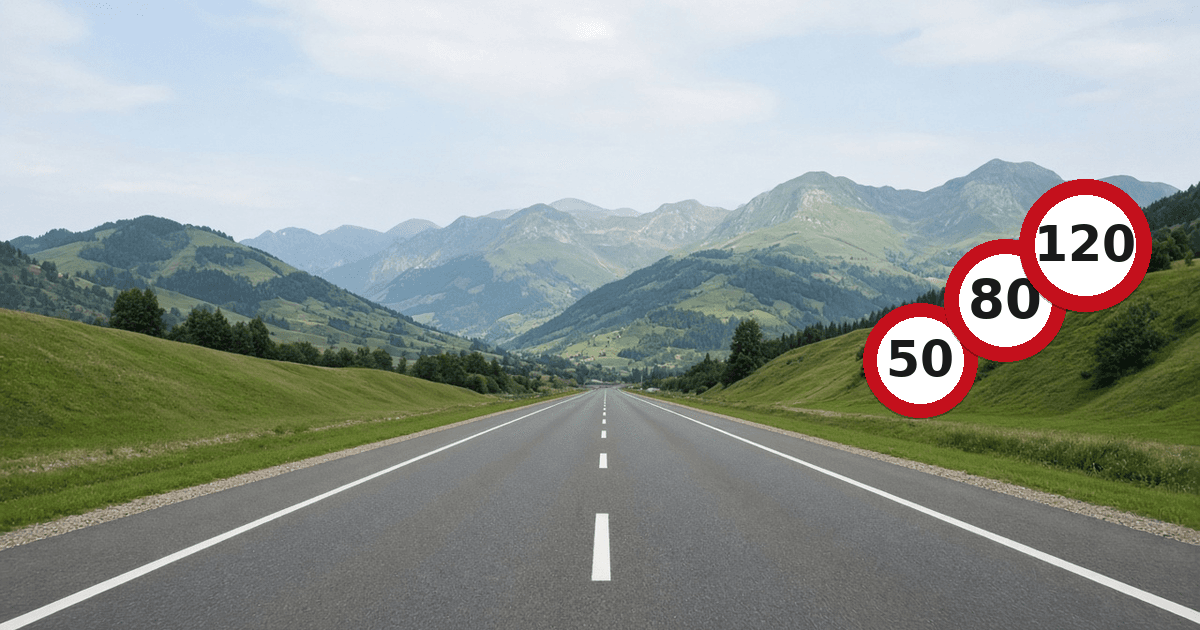
- Speed: The higher the speed, the longer braking and stopping distance. Limits by road type: Swiss speed limits.
Built-up areas vs outside vs motorway
- Built-up (Innerorts): gaps look “normal” but stop-and-go, pedestrians and sudden braking are common – distance and looking ahead count.
- Outside built-up areas: higher speed → more space; crests and bends can shorten sight and reaction time.
- Motorway / expressway: high speed and columns; “following distance on the motorway” exam-wise often means: take the 2-second rule seriously and leave clearly more in wet/snow. Warning signs: Swiss traffic signs.
When the gap is “too small”
Exam-wise the gap is too small if you could not stop safely after a hard brake by the vehicle ahead – or if you force others to swerve or brake abruptly. No invented fine amounts here: the exam rewards reading the situation, not memorised CHF figures. Note: This article is exam prep, not legal advice.
The 2-second rule (and when it is not enough)
The 2-second rule is the central teaching aid for following distance: you keep at least the distance you cover in two seconds.
How to apply it in practice
- Pick a fixed reference point (sign, tree, marking) that the vehicle ahead passes.
- Count calmly “one-thousand-and-one, one-thousand-and-two” (about two seconds).
- If you reach the point only afterwards (or later), the gap is exam-wise ok; if you arrive earlier, it is too small.
The rule works at every speed – the metre gap grows automatically with speed. That makes it more robust than a single metre number.
Wet, snow, fog, night, trailer
- Wet / snow / ice: longer braking distance → often three or more seconds as a learning goal.
- Fog / night / glare: later recognition → more distance and adapt speed.
- Trailer / heavy load: longer stopping distance → increase the gap, do not “tailgate”.
- Tunnel: adapt speed and distance to the situation – one mnemonic only, not a full tunnel-rules article.
Important: The 2-second rule and “half the speedometer” are exam and teaching aids, not precise physics and not a substitute for judgement.
Braking, reaction and stopping distance — exam framing
Clusters like braking distance, stopping distance and “distance formula” often appear as calculation or understanding questions. Keep the three terms separate.
Definitions
- Reaction distance (Reaktionsweg): distance covered during reaction time (from noticing to starting to brake).
- Braking distance (Bremsweg): distance from brake start to standstill.
- Stopping distance (Anhalteweg): reaction distance + braking distance – the full path to a stop.
Rules of thumb (exam / teaching aids)
In CH/DE theory courses these formulas are common (speed v in km/h; result in metres). Label: learning aids for the exam – not lab precision.
- Reaction distance ≈ (v ÷ 10) × 3
- Braking distance (normal) ≈ (v ÷ 10)²
- Braking distance (emergency) ≈ (v ÷ 10)² ÷ 2
- Stopping distance ≈ reaction + braking
Worked example (normal braking, dry road as teaching assumption):
| Speed | Reaction | Braking | Stopping |
|---|---|---|---|
| 50 km/h | (5×3) = 15 m | 5² = 25 m | 40 m |
| 80 km/h | (8×3) = 24 m | 8² = 64 m | 88 m |
| 100 km/h | (10×3) = 30 m | 10² = 100 m | 130 m |
Exam idea: from 50 to 100 km/h speed doubles, braking distance quadruples in the formula (25 → 100 m). So distance ties tightly to speed – limits: Swiss speed limits.
Emergency vs normal braking
For emergency braking (Gefahrbremsung) the teaching formula halves the braking distance versus normal braking – exam-wise: stronger deceleration, shorter braking distance in the sum. Real grip, tyres and road matter; in the exam, clear formula separation and the sum to stopping distance count.
Typical theory traps on distance
Columns / stop-and-go
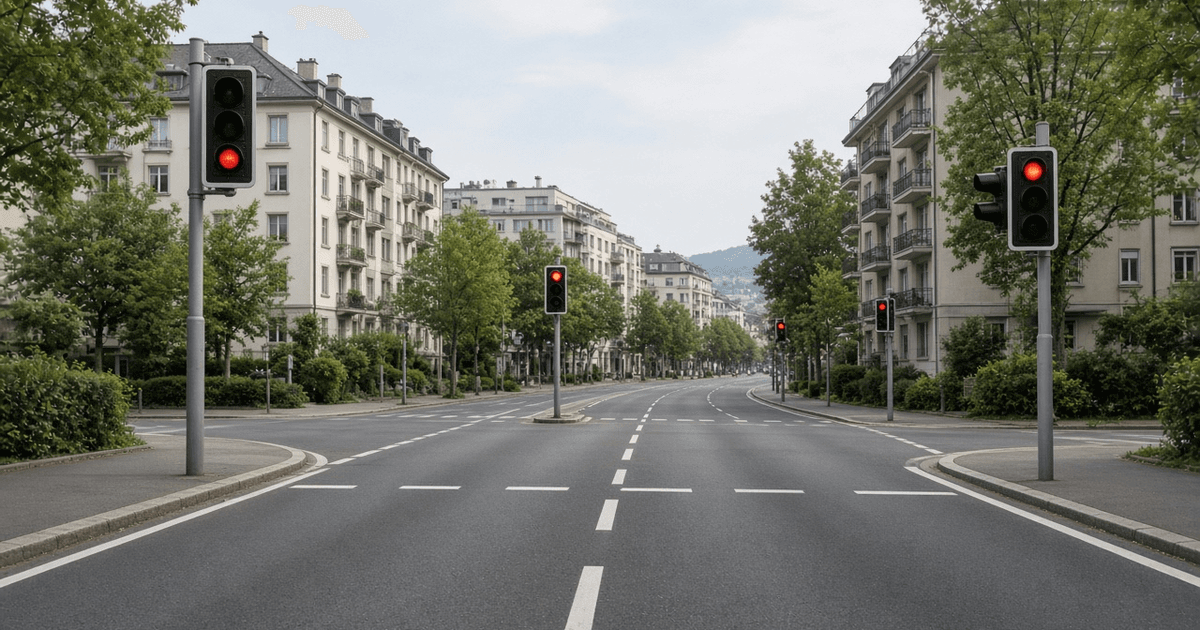
In dense columns the gap often shrinks – exam-wise still: enough distance to react in a chain reaction. When moving off at lights, do not “close up”; read the scene. Signals: Swiss traffic lights.
Overtaking and distance
Before the lane change, during overtaking and when rejoining you need enough gap – tiny gaps are a classic error. Rules and traps: Overtaking in Switzerland.
Motorcycle / moped distance
As a car driver: leave motorcycles space beside and behind – do not tailgate. As a rider: think your own stopping distance and sight line. Practise: Motorcycle theory course.
Typical theory questions on distance & braking
No copyrighted exam dumps – only rule explanations:
- “How large must the following distance be?” – Large enough to stop safely; teaching aids: 2-second rule or “half the speedometer” in metres – more in bad conditions.
- “What is stopping distance?” – Reaction distance + braking distance.
- “What is the braking-distance formula?” – (v÷10)² for normal braking; for emergency often divided by 2 (teaching aid).
- “Is the 2-second rule enough when wet?” – Often not; adapt distance and speed clearly.
- “100 instead of 50 km/h – what happens to braking distance?” – In the formula it quadruples (speed squared).
- “May I close up on the motorway because everyone does?” – No: a column does not replace following distance.
How to practise distance and braking topics online for free
Many errors happen because speed, sight and gap are thought separately. Take two seconds in the simulation:
- Where am I? – built-up, outside, motorway/expressway.
- Road / sight? – dry, wet, fog, night.
- Gap to the vehicle ahead? – mental 2-second check.
- Stopping distance – reaction + braking, speed effect.
- Special cases – overtaking, column, motorcycle, trailer.
Practise:
- Start with the demo.
- Mixed sets on learn the theory test online free.
- Full simulations via learn driving theory or motorcycle on Motorcycle theory course.
- Light upsell if needed: pricing.
Note: Details can vary by canton. When in doubt, ask your road traffic office – this article does not replace official guidance.
FAQ
How large must following distance be in Switzerland?
There is no single metre figure for every situation. Exam-wise: choose a gap so you can stop safely. Teaching aids are the 2-second rule and often “half the speedometer” in metres – clearly more in wet, snow, fog or with a trailer. Overview: Swiss traffic rules.
What is the 2-second rule?
You pick a reference point the vehicle ahead passes and count two seconds. If you reach the point only afterwards, the gap is enough in teaching logic. In bad conditions raise to three or more seconds.
How do you calculate braking / stopping distance?
Teaching formulas: reaction ≈ (v÷10)×3; braking ≈ (v÷10)²; stopping = sum. Emergency: braking often ≈ (v÷10)²÷2. These are exam/teaching aids, not lab measurement.
Is distance different on the motorway?
Same logic – but higher speed and columns. The 2-second rule and adapting to the situation stay central; closing up “because of the column” is wrong exam-wise. Speed context: Swiss speed limits.
Ready to solve distance and braking questions calmly?
Apply the 2-second rule, know the formulas as teaching aids, keep stopping = reaction + braking separate, leave more distance in wet and at speed – that is the exam core for following distance in Switzerland. Pair with Swiss traffic rules, speed limits, overtaking and traffic signs, and practise pictures. Stable distance under time pressure cuts error points – whether the next simulation is car, motorcycle or moped.